The Music Industry Has Shifted — Permanently
A decade ago, making a record meant booking expensive studio time, hiring session musicians, and hoping a label took notice. In 2025, a single artist with a laptop, a DAW, and production knowledge can write, record, mix, and release a track to Spotify, Apple Music, and YouTube — all from their bedroom. The barriers are gone. The gatekeepers are gone. What remains is skill.
For musicians in Jaipur, this shift is both an opportunity and a challenge. The Jaipur music scene has grown significantly — more venues, more independent artists, more content creators looking for original music. But local artists who only know how to perform are losing ground to those who can also produce, self-release, and monetise their own work.
You Cannot Afford to Be Only a Performer
Performing is the most visible part of a music career, but it is rarely the most financially stable. Live gigs are seasonal, geography-dependent, and unpredictable. A musician who can also produce has multiple income streams: sync licensing, session production, beat sales, jingle creation, YouTube monetisation, and teaching.
In Jaipur specifically, the demand for original music in film, advertising, wedding productions, and digital content is growing faster than the supply of qualified producers. Musicians who learn production are not competing for the same limited pool of performance slots — they are entering an entirely different market.
Production Knowledge Makes You a Better Artist
Even if you have no intention of producing commercially, understanding production fundamentally changes how you write and perform music. When you understand how a mix is built — how frequencies interact, how dynamics breathe, how arrangement creates emotion — you start making better creative decisions at every stage.
Singers who understand production know how to perform for a microphone, not just a room. Guitarists who understand production write riffs that sit correctly in a mix. Composers who understand production can communicate precisely with engineers and bring their vision to life without compromise.
The Self-Release Advantage in Today's Streaming Era
Platforms like Spotify, Apple Music, JioSaavn, and YouTube Music have made it possible for any artist to reach a global audience — but only if the music is professionally produced. A poorly mixed track on a major streaming platform does more damage to an artist's reputation than no release at all.
Musicians who learn production can release music on their own timeline, in their own style, without waiting for label approval or studio availability. In a city like Jaipur, where the independent music culture is still maturing, being one of the first artists in your genre to release polished, self-produced work is a significant competitive advantage.
Collaboration Is Easier When You Speak the Language
Music production is the common language of the modern music industry. When you walk into a recording session and understand what the engineer means by "the low-mid is muddy" or "the vocal needs more presence," you stop being a passive participant and start being a creative collaborator.
In Jaipur's growing music ecosystem — spanning film composers, wedding band musicians, independent artists, and content creators — producers are the connective tissue. A musician with production knowledge gets called back. A musician without it gets replaced.
Why Jaipur Is the Right Place to Learn Right Now
Jaipur is no longer just a heritage city — it is developing a genuine creative economy driven by digital media, independent film, advertising, and a generation of young artists who take their craft seriously. The infrastructure for a music career exists here. What most aspiring musicians lack is the production training to take advantage of it.
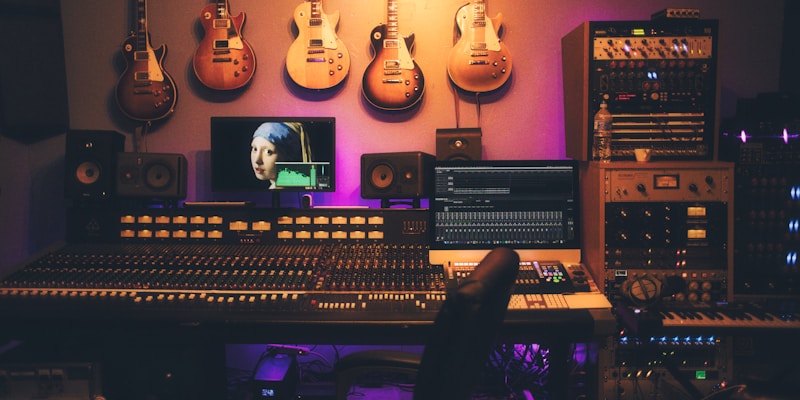
Seven Stones Studio is Jaipur's most complete music education facility — and Rajasthan's only Dolby Atmos enabled recording studio with a 7.1.4 configuration. Students here do not just learn production theory in a classroom — they apply it in a professional studio environment, on industry-standard equipment, under the guidance of working producers. That combination of education and real-world context is what actually produces working musicians.
What You Can Achieve in Six Months
Six months of structured music production training at a professional academy is enough time to go from zero DAW experience to releasing your own tracks. Students in our Music Production Course at Seven Stones go through DAW fundamentals, sound design, beat-making, mixing, and mastering — and finish the programme with a portfolio of completed, release-ready projects.
More importantly, they leave with a workflow, a set of professional habits, and a network — fellow musicians, instructors who are active in the industry, and a studio environment they can continue using. In a city where music industry connections matter, that network has real value.