What a Music Production Course Actually Covers
A genuine music production course is far more comprehensive than tutorials on YouTube or an app subscription. It takes you from the foundations of sound all the way through to producing, mixing, and mastering release-ready tracks — in a structured sequence designed to build real competence.
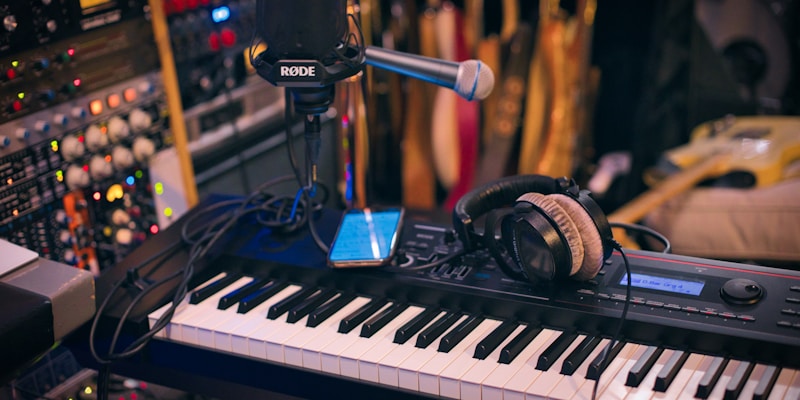
In Jaipur, many programmes claim to teach music production but deliver only surface-level DAW training. A professional-grade course covers: Digital Audio Workstations (DAWs), sound design and synthesis, arrangement theory, recording techniques, mixing, mastering, and how to release music on streaming platforms commercially.
Before enrolling anywhere, ask for the full course syllabus. If the institute cannot hand you a clear, structured curriculum with defined learning outcomes for each module, that tells you everything you need to know.
DAWs You Should Learn: Ableton, Logic Pro & FL Studio
The Digital Audio Workstation (DAW) is your primary production tool. Different DAWs suit different workflows, and the best courses expose you to more than one so you can make an informed choice.
Ableton Live is the industry standard for electronic music, live performance, and loop-based composition. Logic Pro X dominates in singer-songwriter, film scoring, and full-band recording workflows. FL Studio remains popular for hip-hop, trap, and EDM production.
A strong music production course teaches you transferable principles — signal flow, gain staging, EQ, compression, effects routing — so that switching DAWs later takes days, not months. Mastery of one, familiarity with two is the right goal.
Sound Design: Where Producers Find Their Identity
Sound design — the ability to create, sculpt, and manipulate sounds from scratch — is what separates producers who sound like everyone else from those with a distinctive identity. It involves synthesis (subtractive, FM, wavetable, granular) and layering techniques that make your productions immediately recognisable.
Most beginner courses skip sound design entirely and rely on pre-made sample packs. A serious production course teaches you how synthesisers work at a mechanical level — so you understand why a sound behaves the way it does, and can recreate or innovate on any sound you hear.
At Seven Stones Studio, sound design is integrated throughout the curriculum from the second module onwards — not treated as an advanced add-on for students who finish early.
Mixing and Mastering: The Skills That Make Your Music Competitive
You can produce a great arrangement, but if you cannot mix and master it properly, it will never sound competitive on streaming platforms, radio, or in a club. Mixing is the art of balancing elements in frequency, time, and space. Mastering is the final stage that ensures your track translates across every playback system.
Professional mixing involves precision EQ, dynamic control (compression and limiting), stereo width management, parallel processing, and effects automation. Mastering adds loudness normalisation, final limiting, and format-specific encoding.
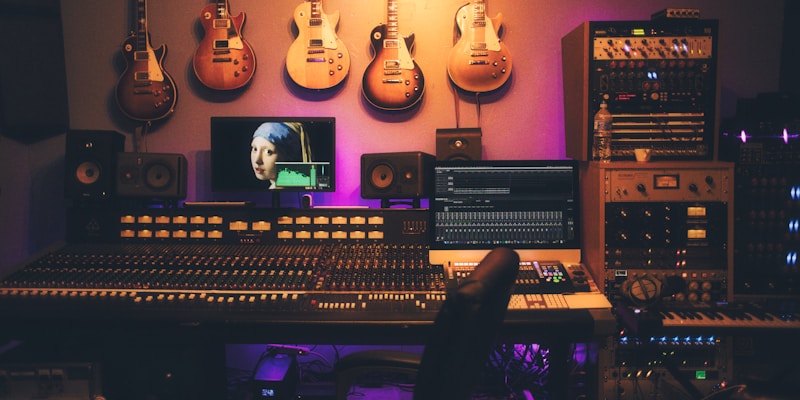
The only way to develop these skills properly is to mix in a professionally treated room on calibrated studio monitors. What you hear on consumer headphones is not the truth of a mix — it is an approximation shaped by the equipment's frequency response. Seven Stones students mix in an acoustically treated environment with reference-grade monitors, which is why their work sounds professional.
What to Look for in a Music Production Institute in Jaipur
Not all music production institutes in Jaipur are equal. Here is a practical checklist before you invest your time and money:
Industry-Active Faculty
Your instructors should be working producers, not academics who stopped making music years ago. Ask for recent projects, releases, or film credits.
Professional Studio Access
Production classes should take place in a properly treated studio with professional monitors — not a bedroom or a regular classroom.
Structured Syllabus
The course should have a clear, written curriculum covering every topic from DAW basics to mastering and release strategy.
Project-Based Learning
By the end of the course you should have produced complete tracks, not just exercises and fragments.
Post-Course Support
A good institute connects graduates to industry opportunities — sessions, placements, collaborations, and continued mentorship.
Why Seven Stones Studio Is the Best Place to Learn Music Production in Jaipur
Seven Stones Studio is Rajasthan's first Dolby Atmos enabled recording studio with a 7.1.4 speaker configuration — the same technology used in the world's best commercial studios. Our music production students do not just learn in a classroom; they produce, record, and mix in this professional environment throughout their programme.
Our lead instructor Nitesh Jhurani brings over 10 years of professional production and live performance experience. The curriculum is built around real-world deliverables: by the time you complete the course, you will have a portfolio of finished, mixed, and mastered tracks ready for release.
Whether you are a complete beginner or an experienced hobbyist looking to go professional, our Music Production Course and Advanced Music Production & Film Scoring Course provide the most structured, studio-backed path to becoming a working music producer in Jaipur.