What Music Production Really Is
Music production is the entire journey of taking an idea from concept to finished, release-ready track. It encompasses songwriting, arrangement, sound design, recording, mixing, and mastering — not just pushing faders.
This breadth is what makes it feel overwhelming for beginners. Think of it like learning a language: you start with foundational vocabulary, build confidence through repetition, and gradually reach fluency.
This guide gives you an honest, practical roadmap — skipping the hype and focusing on the decisions and habits that actually move you forward.
Choosing Your DAW: Ableton vs Logic and Beyond
The Digital Audio Workstation (DAW) is where you record audio, program MIDI, arrange ideas, and mix your music. The honest truth: the best DAW is the one you commit to learning.
Ableton Live is beloved for its session view and loop-based workflow — ideal for electronic music and rapid idea generation. Logic Pro X is a macOS powerhouse with a massive built-in library, better suited to recording bands and songwriters who think in song structure.
FL Studio, Pro Tools, and Cubase are all strong alternatives for specific workflows. What matters most is picking one platform and giving it three to six months of dedicated practice before drawing any conclusions.
Understanding the Signal Chain
The signal chain is the path your audio travels — from source through processing to output. Understanding it separates beginners who plateau from those who grow quickly.
At the mixing stage, plugin order matters enormously: a compressor placed before an EQ produces a different result than the same compressor placed after it. Each processor changes the dynamics and frequency content of what follows it.
Develop the habit of critical listening at every stage. Ask what changes when you add compression, or how a high-pass filter affects the full mix. This builds the intuition that separates technically proficient producers from truly musical ones.
Building Your Ear: The Most Underrated Skill in Production
Your ear is your most important instrument. Critical listening is the skill most professionals wish they had developed earlier — all the technical knowledge in the world means little without it.
Start with reference mixing: compare a track you love directly to your own productions. Notice how the bass sits, how the stereo width feels, how the kick has clarity without aggression. These observations become your compass.
Listen analytically outside of production sessions too. On your commute, pay attention to arrangement choices, chord changes, and use of space. This active listening rewires how you think about sound faster than almost any tutorial.
The Role of a Professional Studio Environment in Your Development
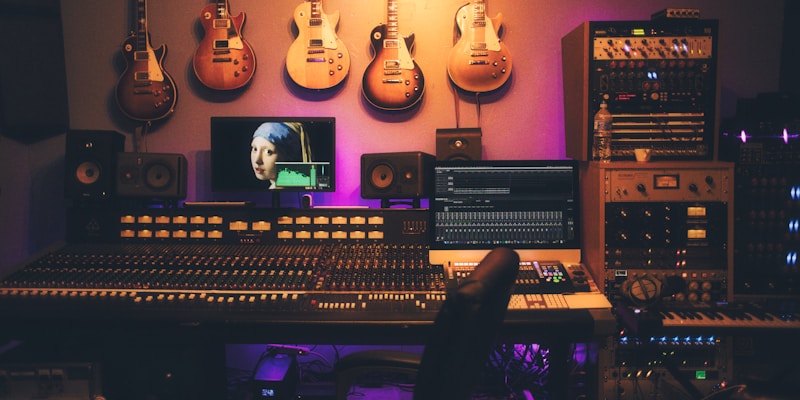
In a professionally acoustically treated room with calibrated studio monitors, you hear your music as it actually is — not through the distorted lens of room resonances and cheap headphones.
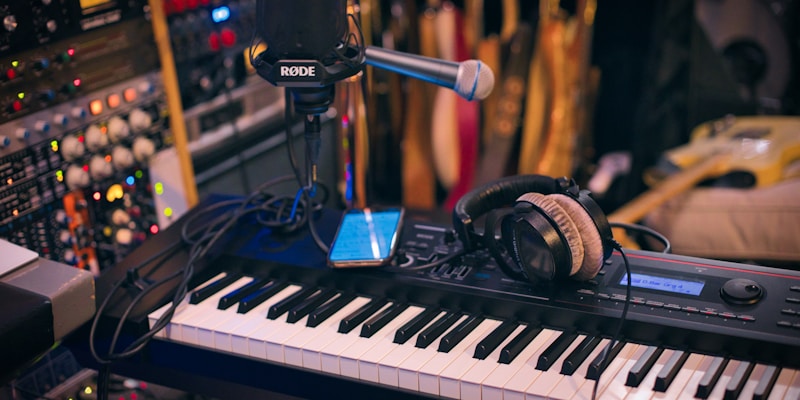
A professional studio also gives you access to outboard compressors, high-end preamps, and hardware synthesisers that most beginners could never afford outright — plus experienced mentors who can identify in ten minutes what would take you months to figure out alone.
At Seven Stones Studio, our music production course puts students in professionally treated rooms working on real projects. The curriculum takes you from DAW fundamentals to producing, mixing, and mastering complete tracks in a setting that reflects the industry.
Starting Strong: Habits That Separate Fast Learners
The producers who grow fastest are not the most talented — they are the most consistent. Even thirty minutes of focused daily production time will compound into remarkable progress over a year.
Finish things. A rough, imperfect completed track teaches you more than fifty abandoned sketches. Document what worked and carry those lessons into the next project.
Surround yourself with community. Growth accelerates dramatically when you are getting feedback, sharing references, and being challenged — whether online or, ideally, in a physical space with instructors and peers.